
The irritation model is the most streamlined configuration of ALIsens®, designed for rapid assessment of local respiratory effects. It focuses on early inflammatory and cytotoxic responses following realistic inhalation exposure. This variant is typically used for screening, formulation comparison, and dose-ranging studies where fast, reliable irritation data are required to guide early development decisions.
Ideal for early-stage hazard flagging and compound ranking
Shorter timelines and lower complexity
Clear indication of irritation potential under ALI conditions

The sensitization model is the most advanced and biologically complex configuration of ALIsens®. By integrating multiple immune-relevant endpoints, it enables the identification of respiratory sensitizers and their differentiation from simple irritants. This variant is intended for decision-critical programs where understanding sensitization risk is essential.
Differentiates respiratory sensitizers from irritants
Designed for regulatory-oriented hazard assessment
Suitable for high-impact compounds and advanced development stages.
Some substances present significant technical challenges due to reactivity, instability, or exposure constraints. The hard-to-test variant of ALIsens® is specifically adapted for such compounds, including anhydrides and other difficult chemistries. Exposure strategies and handling procedures are customized to ensure data quality without compromising model integrity.
Tailored protocols for reactive or unstable substances
Adapted exposure and dosing strategies
Enables assessment of compounds often excluded from standard assays
For organizations with strict animal-free policies or vegan product positioning, ALIsens® is available using a bovine-free culture medium. This option maintains the scientific performance of the model while aligning with internal compliance, ethical commitments, and product claims.
Free of bovine-derived components
Compatible with animal-free and vegan policies
Same study design and outputs as standard ALIsens® models
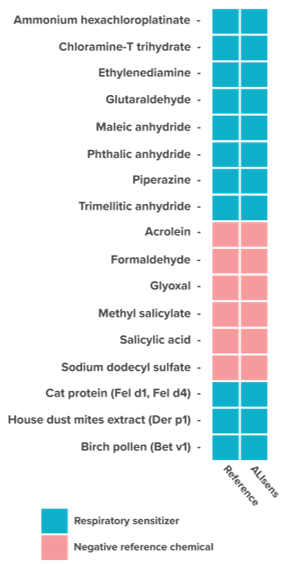
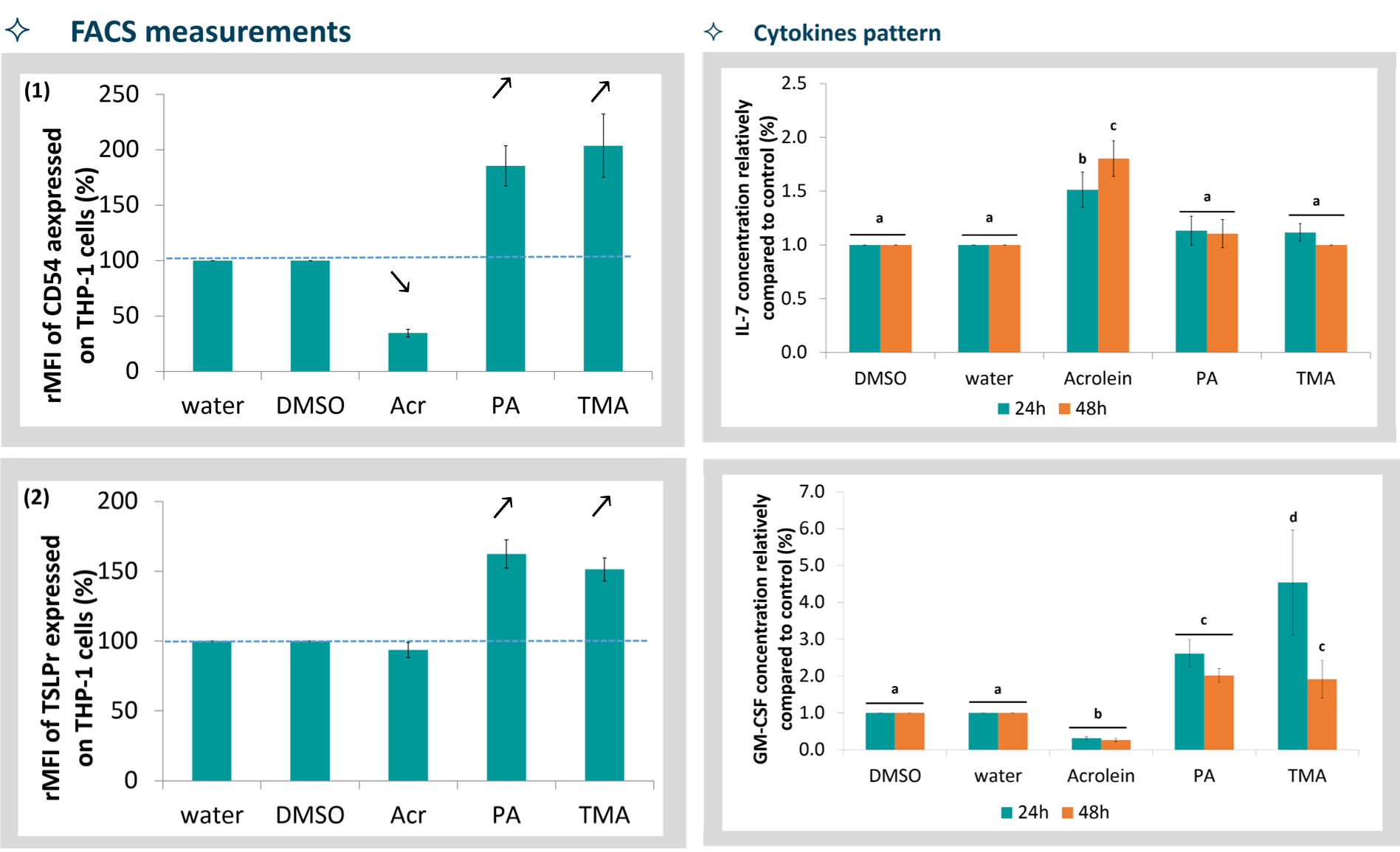
ALIsens® correctly identifies respiratory sensitizers (e.g., phthalic anhydride, trimellitic anhydride) and distinguishes them from irritants (e.g., acrolein) by analysing biomarker expression patterns under controlled ALI exposure.
This capability has been highlighted in independent research showing that ALIsens® can successfully discriminate respiratory sensitizers from skin sensitizers and non-sensitizers — a key challenge for traditional assays.